
Buyer's Guide


Travel Authorisation and Visa Requirements for the US, UK, and Canada. A Practical Guide for International Travellers
Tue/Mar/2026 Travel requirements are increasingly structured around pre-authorisation systems rather than traditional visas. For travellers and property buyers moving between Europe, the United States, the United Kingdom, and Canada, understanding these systems is essential.
While each country maintains its own framework, there is a shared direction. Short-term travel is often visa-free for eligible nationalities, but entry now typically requires advance electronic approval.
This guide outlines how these systems work, what is required, and how they differ across the three key destinations.
1. United States. ESTA and Visa Framework
The United States operates one of the most established travel authorisation systems through the Visa Waiver Program.
Key requirements:
ESTA (Electronic System for Travel Authorization)
Travellers from eligible countries, including Portugal, the UK, and most of Europe, must apply for ESTA before boarding a flight to the US.
- Valid for tourism, business, or transit
- Allows stays of up to 90 days
- Valid for two years or until passport expiry
- Must be approved prior to travel
When a visa is required
A full visa is necessary if:
- You plan to stay longer than 90 days
- Your ESTA application is denied
- You are travelling for work, study, or residency
What makes it distinct:
The US system is strict on compliance. Entry decisions are made at the border, and ESTA approval does not guarantee admission.
2. United Kingdom. ETA and Entry Rules
The United Kingdom has introduced its own electronic travel authorisation system, aligning with global trends.
Key requirements:
ETA (Electronic Travel Authorisation)
Travellers who previously entered visa-free will now require an ETA before arrival.
- Applies to short stays for tourism, business, or family visits
- Typically valid for multiple entries over a set period
- Required before boarding
Visa requirements
A visa is required for:
- Long-term stays
- Work, study, or relocation
- Certain nationalities outside the visa-free list
Border control
The UK maintains independent immigration control. Entry is assessed individually, even with ETA approval.
What makes it distinct:
The UK sits between Europe and North America in approach. It combines structured pre-clearance with strong border discretion.
3. Canada. eTA and Visa System
Canada uses a streamlined electronic authorisation system for visa-exempt travellers.
Key requirements:
eTA (Electronic Travel Authorization)
Required for travellers flying into Canada from visa-exempt countries.
- Valid for tourism, business, or transit
- Allows stays of up to six months
- Linked electronically to your passport
- Valid for up to five years or until passport expiry
When a visa is required
- For longer stays or specific purposes such as work or study
- For travellers from non-exempt countries
Entry process
Canadian border control is generally structured but efficient. As with other countries, final entry is determined at the point of arrival.
What makes it special:
Canada offers one of the most straightforward systems. The process is digital, efficient, and typically less restrictive than the US.
4. Key Differences. Understanding the Systems
While similar in concept, each country applies its own rules and timelines.
Duration of stay
- US. Up to 90 days under ESTA
- UK. Typically up to 6 months for visitors
- Canada. Up to 6 months under eTA
Validity of authorisation
- US ESTA. 2 years
- UK ETA. Multi-entry, validity varies
- Canada eTA. Up to 5 years
Application timing
All systems require approval before travel. Applications are usually processed quickly, but should be completed in advance.
What makes this important:
Understanding these differences avoids complications at boarding or entry. Each system operates independently, even though they appear similar.
5. When You Need More Than a Travel Authorisation
Electronic authorisation is designed for short-term visits. A full visa is required when your plans extend beyond this scope.
Common scenarios requiring visas:
- Employment or business operations
- Study or academic programmes
- Long-term residence or relocation
- Investment or immigration pathways
Each country has its own visa categories, timelines, and requirements. These are significantly more detailed than travel authorisations.
6. Practical Considerations for Travellers and Property Buyers
For individuals travelling frequently between Portugal, the US, the UK, and Canada, planning becomes essential.
Key points to consider:
Apply early
Even though approvals are often quick, delays can occur.
Check passport validity
Authorisations are tied to your passport. Renewal requires a new application.
Understand purpose of travel
Short visits are clearly defined. Activities outside those limits can lead to refusal at the border.
Plan for frequency of travel
Multiple-entry permissions are helpful, but excessive travel may raise questions at immigration.
Conclusion
Travel between Portugal, the United States, the United Kingdom, and Canada is relatively accessible, but no longer informal.
The shift towards electronic pre-authorisation means that preparation is essential. The US operates a more controlled system. The UK is evolving its structure. Canada offers simplicity and efficiency.
For most travellers, the process is straightforward when understood in advance. The key is clarity. Know which system applies, apply early, and ensure your travel purpose aligns with the permissions granted.
Share
Related news
Market Knowledge
Read More
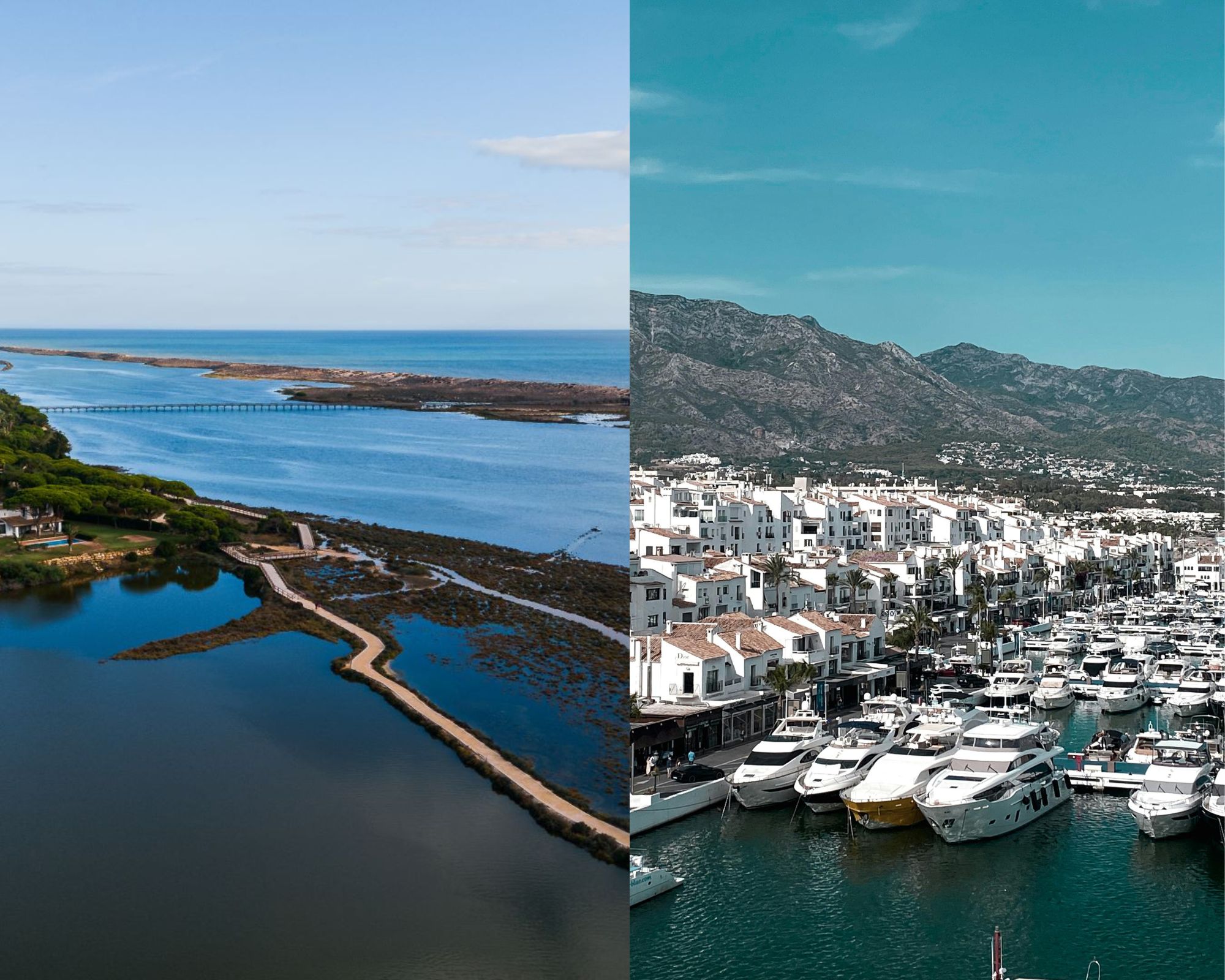
Living in Portugal vs Spain: Why the Best Location to Move in Europe is Portugal
Thinking of relocating to Europe? Discover the pros and cons of living in Portugal vs Spain. Compare...

Market Knowledge
Read More
Discover why high-net-worth buyers are investing in Algarve luxury real estate in 2025. Quinta do Lago recorded ten €10–20M sales at €12,882/m², with strong demand across the Golden Triangle and premium yields up to 8%.
Portugal’s “Economy of the Year” status fuels luxury real estate growth. Discover 2025’s record sales in Quinta...

Market Knowledge
Read More
The Quinta do Lago and Vale do Lobo Property Buyer’s Decision Framework in 2026
The Golden Triangle of the central Algarve, the corridor encompassing Quinta do Lago, Vale do Lobo and...